
The Loudest Person in the Room Is Not Always Leading It
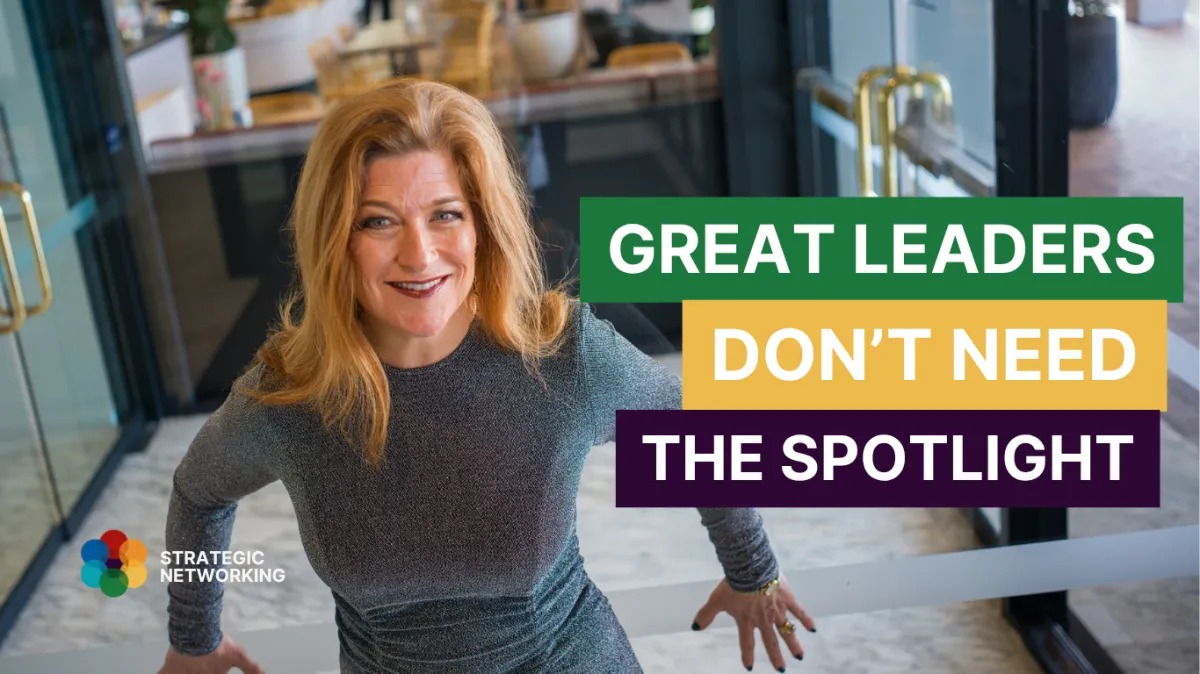
Put a group of business people in a room and leadership can become very visible.
There is often someone at the front with the microphone, someone asking the first question, someone who knows everybody and someone who can turn a two-minute introduction into a small keynote.
We tend to notice the confident voices.
But the loudest person in the room is not always the one leading it. Sometimes leadership looks much quieter.
It is the person who notices that a brilliant idea was spoken over and brings the conversation back to it.
It is the person who introduces two people, explains why the connection matters and then steps out of the spotlight.
It is the person who shares the credit, asks the useful question or makes it safer for somebody else to contribute.
Leadership changes the quality of the room
A leader does not only influence what gets done. A leader influences how people experience being part of the work.
Do people feel heard? Do they understand where they are going? Can they ask for help without feeling weak? Are ideas allowed to come from somewhere other than the top of the hierarchy?
These questions are deeply connected to networking.
Strategic networking is not simply about who I can meet. It is about how information, trust and opportunity move between people.
Good leaders pay attention to that movement.
They can see when one person holds too much information. They notice when teams are solving the same problem separately. They recognise when a customer conversation, a colleague's expertise and a new opportunity should be connected.
Do not become the only bridge
Being well connected can feel powerful.
Everybody comes to you. You know who to ask. You are included in every decision because you hold the map of how people and information fit together.
But if every connection has to pass through you, you have not built a strong network.
You have built a bottleneck.
Leadership is not proving that the organisation cannot function without you. It is creating enough trust and clarity that useful relationships can form without your constant involvement.
That may mean introducing two team members directly rather than carrying messages between them. It may mean allowing someone else to lead the client conversation. It may mean sharing the history behind a decision so people can make better decisions next time.
A strong leader creates more connectors.
Five small acts of connective leadership
This does not require a new leadership programme or a dramatic restructure.
It can begin with five small habits.
Notice who has not spoken, and create a genuine opening rather than putting them on the spot.
Give credit with names attached. 'The team had an idea' is less powerful than explaining whose thinking moved the work forward.
Introduce people with context. Help each person understand why the relationship may matter.
Share information before it becomes power. People make better contributions when they can see the bigger picture.
Step back after making the connection. Do not stay in the centre simply because you opened the door.
None of these habits is flashy.
That is rather the point.
What happens after you leave?
A useful test of leadership is not how much attention follows you into a room.
It is what continues after you leave it.
Are people more confident about speaking to each other? Do they understand whose expertise to call on? Are they willing to share an idea, ask a question or offer support?
The most effective leaders I know do not collect all the relationships around themselves.
They strengthen the relationships around the work.
So, in your next meeting, event or team conversation, resist the urge to prove you have the answer first.
Look around the room.
What idea needs amplifying? Who needs connecting? Where could a little more trust make everybody better?
Leadership may begin with what you notice next.
Happy Connecting!
WLC

ABOUT THE AUTHOR
Wendy Lloyd Curley is a professional speaker, trainer, bestselling author, and business owner who helps small business owners develop strategic networking skills that create meaningful business relationships, stronger referral partnerships, and long-term growth.
She specialises in working with businesses where the owner is still actively involved in business development... because networking becomes far more effective when relationships are built with intention instead of chance.
STAY AHEAD WITH STRATEGIC NETWORKING
Subscribe to "Connect the Dots" for weekly articles by Wendy Lloyd Curley. Get actionable networking strategies, tips for professional growth, and real-world stories delivered straight to your inbox.



© Copyright 2026. Strategic Networking (Wendy Lloyd). All Rights Reserved.