
What If Referrals Are the Outcome, Not the Purpose?
I came home from Manila with more than pages of notes.
I came home questioning my own thinking.
One of the privileges of attending an international BNI conference is the opportunity to spend time with leaders from around the world. We all come from different cultures, lead in different markets and face different challenges, yet there are moments when a conversation stops you in your tracks.
For me, one of those moments happened during an Executive Exchange session with John Yoon, National Director of BNI South Korea.
John reflected on one of the reasons BNI has been so successful throughout much of Asia. He suggested that many Eastern cultures naturally embrace long-term thinking. They place a high value on learning, developing people and building relationships over time. He contrasted that with the tendency many of us in Western cultures have to think more transactionally. We often focus on the next opportunity, the next result and the next win.
As an American by birth and an Australian by choice, I felt a little uncomfortable.
Because I recognised myself.
How often have I measured the success of a meeting by the opportunity it might create? How often have I encouraged my team to think about the return on investment? How often have I quietly asked myself, "What's the outcome?"
They're not unreasonable questions. We're in business, after all.
But perhaps they shouldn't be our first questions.
Over the next few days, that thought kept resurfacing.
Later, Stella Yung reinforced the importance of making learning one of our highest priorities as leaders.
Then I heard Ilona Teremi explain why she had consciously stopped referring to "training" and instead talked about "learning and development."
Three different conversations.
Three different leaders.
One consistent message.
I realised that what makes BNI so powerful isn't simply that we help one another generate referrals. It's that we develop business leaders.
When people commit to learning, they become better communicators. Better listeners. Better networkers. Better leaders. As those skills develop, stronger relationships naturally follow. And when relationships become stronger, opportunities follow too.
By the time I arrived home, I found myself introducing every presentation with the same sentence.
We are a community of business leaders who value learning and development.
The more I said it, the more it resonated with me.
For years, I've encouraged people to stop leaving their networking to chance and to become more strategic about the relationships they build.
This experience reminded me that strategic relationships don't begin with asking, "What's in it for me?" They begin with asking, "What can I learn?"
That simple shift changes the conversation.
It changes the relationship.
And, over time, I believe it changes the results.
Then another thought occurred to me.
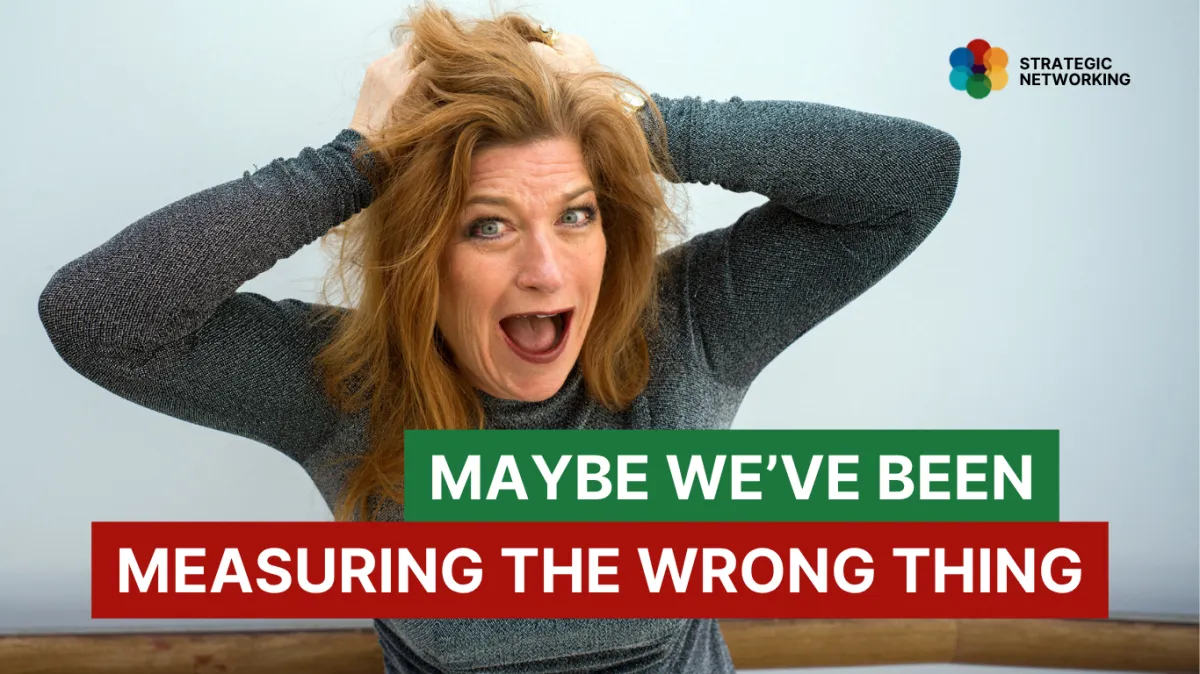
Perhaps we've been measuring BNI by the wrong metric. We often talk about referrals passed, business generated, visitors invited, and members retained.
Those measures matter. They always will.
But what if they are the outcome, not the purpose?
Maybe the better measure is this:
How many business leaders did we develop this year?
Because when people commit to learning, they become better communicators. Better listeners. Better networkers. Better leaders.
Better leaders build stronger relationships and stronger relationships create more opportunities.
Perhaps that's the real lesson I brought home from Manila.
It wasn't really about networking.
It was about leadership.
And maybe the strongest business communities aren't built because people are looking for referrals.
Maybe they're built because people are committed to becoming better leaders together.
I'd love to hear your thoughts.
If someone measured your success this year, would they count the business you've generated...
...or the leader you've become?

ABOUT THE AUTHOR
Wendy Lloyd Curley is a professional speaker, trainer, bestselling author, and business owner who helps small business owners develop strategic networking skills that create meaningful business relationships, stronger referral partnerships, and long-term growth.
She specialises in working with businesses where the owner is still actively involved in business development... because networking becomes far more effective when relationships are built with intention instead of chance.
STAY AHEAD WITH STRATEGIC NETWORKING
Subscribe to "Connect the Dots" for weekly articles by Wendy Lloyd Curley. Get actionable networking strategies, tips for professional growth, and real-world stories delivered straight to your inbox.



© Copyright 2026. Strategic Networking (Wendy Lloyd). All Rights Reserved.